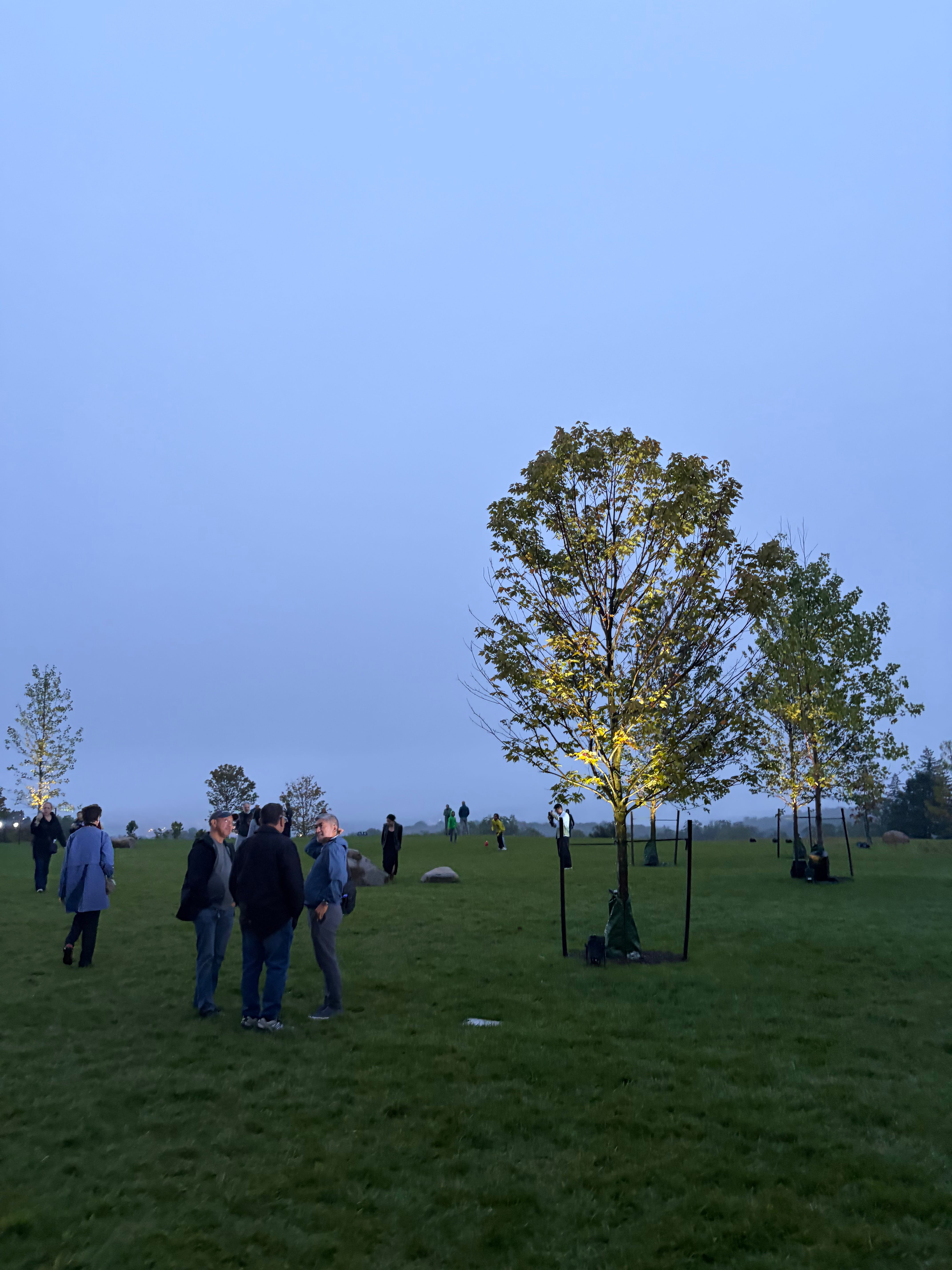
In the gray fog of the first rainy night of fall, figures haunted the grass of the Hudson Valley Shakespeare. You can’t light or fabricate that kind of magic: the eerie, cinematic mist surrounding revolutionaries of the beloved “Les Misérables.”
Hudson Valley Shakespeare is one of many regional theaters around the country to perform “Les Misérables” this year. Its space gives it a home court advantage, and with this direction and cast, it becomes a fluid triumph of a beloved revival.
It’s hard to go to any Hudson Valley Shakespeare show and not enjoy the experience simply for the awe of its stage. The theater traded its classic white tent at Boscobel House for The new Samuel H. Scripps Theater Center, an earthy, neatly constructed thrust stage looking out onto a large field of grass. If it’s nice, you can picnic before the show; I was disappointed it wasn’t, but by the time we got there, it was clear we were getting a theatrical version only elevated by the weather—the mist creating a graveyard-like quality.
That’s because “Les Misérables,” at one of its many cores, is about ghosts. The people who haunt us, why some get to live while others die. For the unacquainted, “Les Misérables,” based on the Victor Hugo novel, is an epic that follows a former inmate, Jean Valjean, in early-1800s France. It follows him from his parole through his death, along the way connecting him to the inspector he runs from, the child he takes care of after her mother dies, and the revolutionaries he helps at the barricade.
“Les Misérables” is hard not to be in awe of: its sweeping orchestrations, powerful ballads, moral questions, and its weaving of emotional stories. Director Jenn Thompson’s version, in this more intimate space, is quite pared down for such a musical at its scale. The main set piece is a damaged French flag (which is used masterfully as the front of the barricade) but otherwise mostly wooden chairs and tables, with simple props to gesture to churches, inns, factories, and the like.
We lose some of the flourish that comes with the typical grand scale of “Les Misérables,” but at a well-earned price. This is “Les Misérables” up close and personal.
While the smaller scale strips away some of the musical’s spectacle, it also strips away the distance. We’re so close to the characters you almost wonder if you’re going to join in on the barricade. The deaths, sacrifices, and losses feel less like grand musical theater and more like something happening to actual people right in front of you. Josh Young as Valjean leads the cast stunningly: assured in stature, pensive in his questioning of morality, all with a voice you could imagine on the world’s greatest stages, making you feel lucky to hear it so close.
Thompson also reveals gorgeous, sweeping moments of doubling. The most striking were the children; the show does have three named children, but Thompson uses them multiple times throughout the show, even in the dark moments; a reminder that they were witnesses to atrocities of the time. It makes Gavroche’s death all the more cutting, especially with a standout performance from Grandiere (Lucas Hakoshima).
The ensemble members go from on the chain gang to prostitutes to revolutionaries. In one of the most striking moments, a group of women come on stage to mourn the soldiers of the revolution—who are female actors, doubling as male revolutionaries, lying on the ground. The mourning women pick up the dead men, and give them bonnets to transform them into fellow mourning women. What’s left behind are puddles of jackets on the ground, invisible ghosts of the dead men. It’s a haunting image that makes the musical’s ghosts literal: the people who die are still present in the people who remain.
The doubling in lead roles works less well in this up close view. David Beach is a scene-stealer as Monsieur Thénardier, waddling onto the stage in a kooky and sinister style, but also plays the reserved bishop. Hayley Dortch doubles as Fantine and Enjolras. As wonderful as she is in both roles—a desperate mother and assured revolutionary—I was distracted by her put-upon masculinity and octave-switching, and racked my head for why these two particular characters would be played by the same person. The ensemble doubling feels so purposeful that the lead-role doubling occasionally feels more like a theatrical puzzle than part of the production’s vision. The only reason I could fathom is that Dortch was such a wonderful actress they wanted to use her twice.
It’s no matter. Both times Dortch walked through the long stretch of grass—first as a dead Enjolras, haunting his fellow revolutionary, the next as a dead Fantine, to bring Valjean to heaven with her—I had chills as the glowing lights illuminated her through the mist.
I knew the deaths were coming. I knew the songs, the barricade, the ending. And still, with these actors walking through the grass as ghosts of the people they’ve just played, the loss felt immediate.
That’s the real power of “Les Misérables”: after all these years, its questions about sacrifice, survival, and justice still haunt us.
How I Saw ‘Les Misérables’
“Les Misérables” runs at Hudson Valley Shakespeare through the end of this week, and the final productions are sold out. However, let this be your reminder to stay close to whatever this theater is doing next summer—it’s worth a trip up north to see nearly anything in this space.
How I found out about it: I read about the surge of current productions of “Les Misérables” in The New York Times and immediately looked for tickets when I saw Hudson Valley Shakespeare was doing a production. I knew it’d be special; I’m lucky to have grown up going to their shows (when it was still in a big white tent at Boscobel House!) and love their open-air theater.
How I got tickets/How to get cheap(er) tickets: On their website! They have tiered prices starting at $35; our tickets for a weekend show in the second row were $55. There’s a 15% discount for select groups (students, seniors, military, etc.)
The Ghosts of My ‘Les Misérables’ Past
I’d be remiss if I didn’t mention that one reason I loved this production of “Les Misérables” is because I have a history with “Les Misérables.”
Teenagers are usually obsessed with odd things, but the teenagers I was friends with were obsessed with “Les Misérables.”
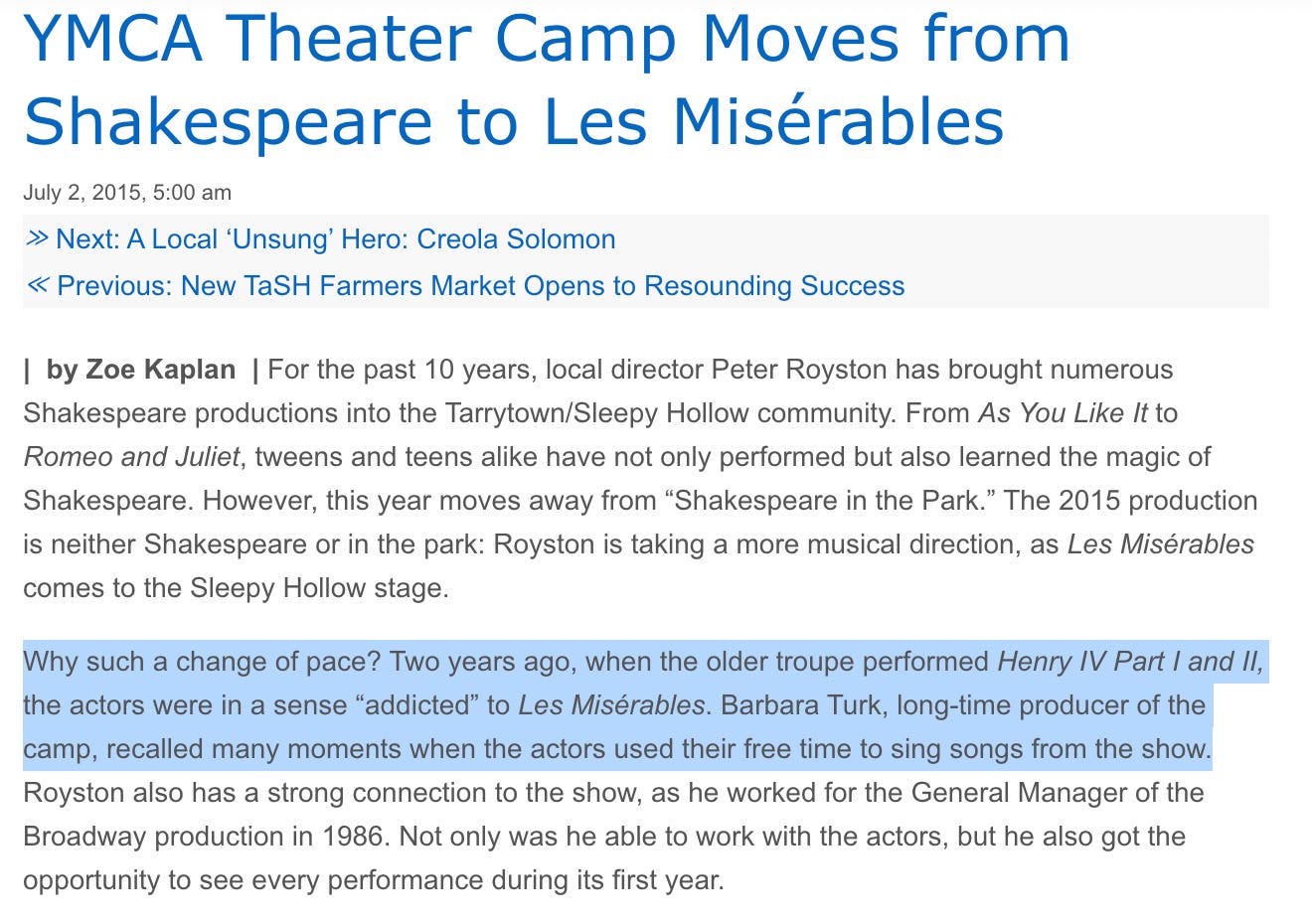
In an odd parallel to Hudson Valley Shakespeare taking on a musical, in 2015, my long-beloved summer Shakespeare camp took a turn: instead of doing another Shakespeare adaptation, we were going to do a production of “Les Misérables.”
I recently re-read the article I wrote about this in the Hudson Valley news—talk about conflict of interest!—I’d forgotten that the pivot was actually inspired by my fellow summer actors’ obsession over the show.
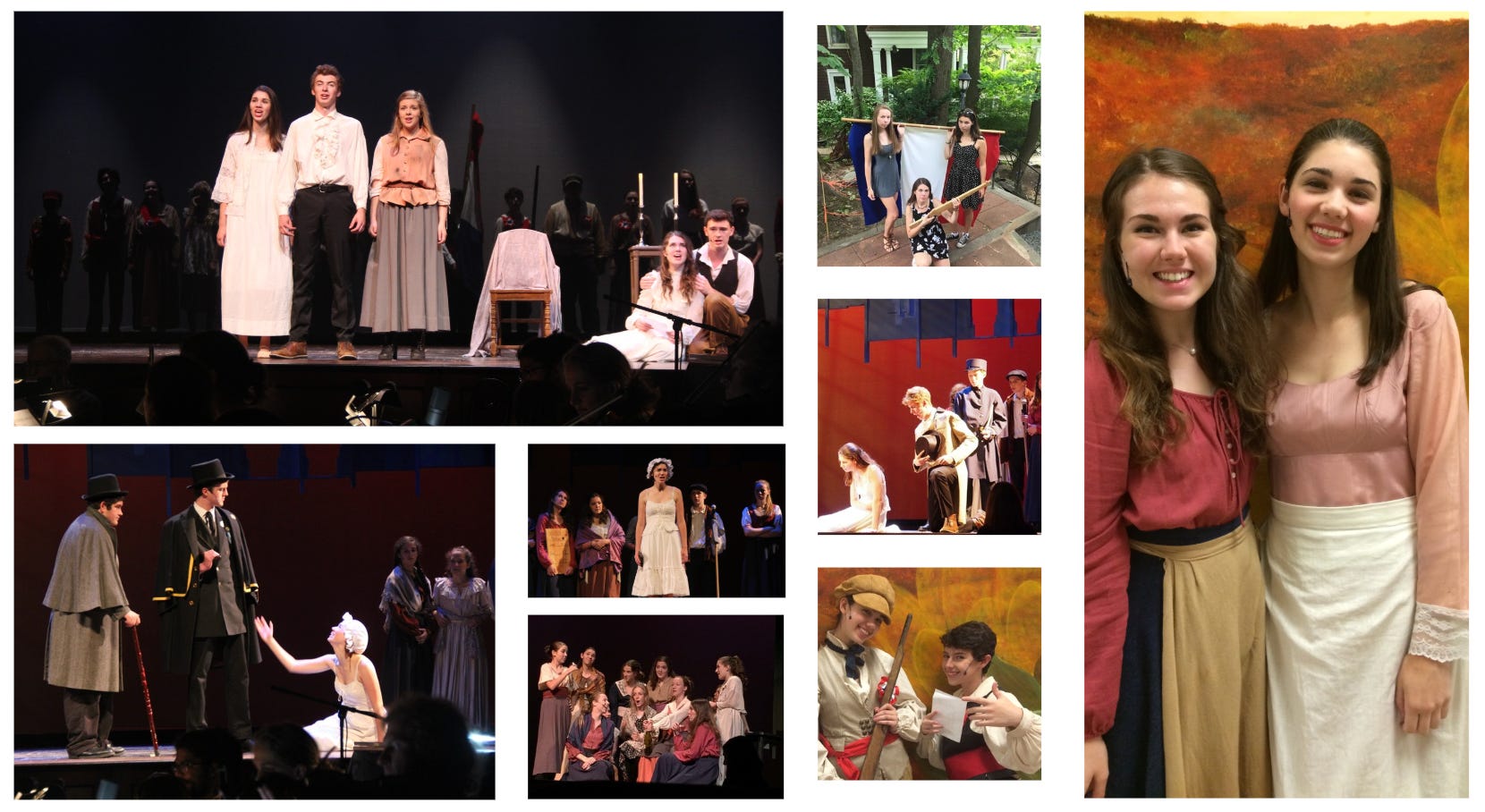
I remember that summer with so, so much fondness and joy. We were obsessed. We all gathered to watch the movie; made a meme account with “Les Misérables” related puns; some of them even read the whole book. For months after the production, we fought over who could keep the prop French Flag in their house, going as far as to set up elaborate stealing schemes. I still have a piece of the barricade we made.
The obsession spread. Wonderful members of the town helped with costumes, a bold set (with an actual barricade and silhouette screen), a pit orchestra. My mom—who loves my sister and me but doesn’t love musicals—came to every three-hour performance. My little cousin loved it because both my sister and my character died, and also there was a song about the colors red and black, her favorite (because blood and death. Obviously).
Why the obsession? The people love “Les Misérables.” “Les Misérables,” like Shakespeare, is classic: an ever-lasting story that will always feel relevant.
So yes, I felt haunted by the ghosts of the characters in Hudson Valley Shakespeare’s “Les Misérables,” but also by one of the best summers of my life. How lucky am I to have to returned, especially along with a fellow castmate and in-show daughter: the Cosette to my Fantine.